Can You Visit Death Valley by Amtrak? (2026 Guide)
Yes—you can visit Death Valley National Park using Amtrak, but not directly. While there isn’t an Amtrak station inside the park, several nearby stations make it possible to combine a scenic train journey with a rental car, shuttle, or guided tour. It’s an excellent option for travelers who want to avoid long hours of driving while still experiencing one of America’s most extraordinary national parks.
Known for its dramatic desert landscapes, colorful canyons, towering sand dunes, and record-breaking temperatures, Death Valley National Park offers a landscape unlike anywhere else in the United States. This guide explains how to reach the park by Amtrak, the best stations to use, what to see after you arrive, and practical travel tips for planning your adventure.
Can You Get to Death Valley by Amtrak?
Not directly. Amtrak doesn’t operate trains into Death Valley National Park, but several nearby stations provide convenient access to the region. After leaving the train, you’ll need to complete the final portion of your trip by rental car, private shuttle, or guided tour.
Most visitors choose to travel from Southern California or Las Vegas before driving into the park. Because Death Valley covers more than three million acres and has very limited public transportation, having your own vehicle is usually the most practical option.
Closest Amtrak Stations to Death Valley
- Bakersfield, California – one of the most popular gateways via the San Joaquins.
- Barstow, California – convenient for travelers arriving from the Southwest Chief.
- Needles, California – another option for visitors approaching from Arizona or the Southwest.
From these stations, travelers typically rent a car and drive to Furnace Creek, the heart of Death Valley National Park.
Best Amtrak Routes for Visiting Death Valley
The best train depends on where you’re starting your journey, but several Amtrak routes provide convenient access to nearby stations.
San Joaquins
Travelers coming from Northern California often take the San Joaquins to Bakersfield before continuing by rental car into Death Valley. This is one of the easiest options for visitors starting in the San Francisco Bay Area or Sacramento.
Southwest Chief
The Southwest Chief serves Barstow and Needles, making it a convenient choice for travelers arriving from Chicago, New Mexico, Arizona, or Kansas.
California Zephyr & Coast Starlight Connections
If you’re traveling on the California Zephyr or Coast Starlight, you can transfer to connecting California services before completing the journey by road.
What to See in Death Valley National Park
Death Valley is far more diverse than many visitors expect. Alongside vast desert plains, you’ll find colorful badlands, towering mountains, salt flats, sand dunes, and remarkable geological formations.
Badwater Basin
At 282 feet (86 meters) below sea level, Badwater Basin is the lowest point in North America. The endless white salt flats create one of the park’s most iconic landscapes.
Zabriskie Point
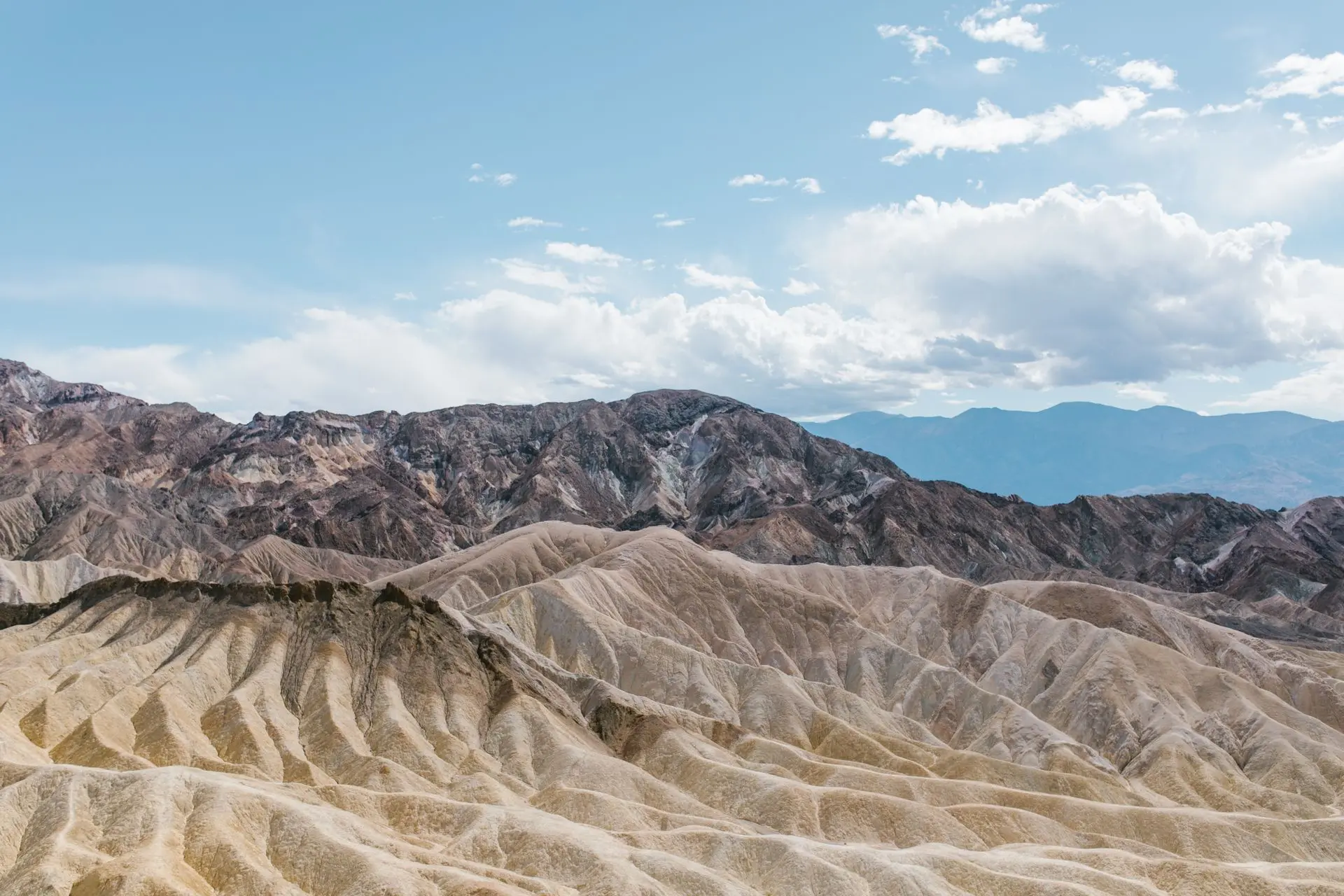
One of Death Valley’s most photographed viewpoints, Zabriskie Point offers sweeping views over colorful eroded hills that glow beautifully at sunrise and sunset.
Mesquite Flat Sand Dunes
These spectacular dunes near Stovepipe Wells provide excellent hiking opportunities and are especially beautiful during the golden hours of early morning and late afternoon.
Artist’s Drive
This scenic one-way road passes vibrant volcanic hills streaked with pink, green, purple, and gold minerals, making it one of the park’s most memorable drives.
Dante’s View
Perched more than 5,000 feet above the valley floor, Dante’s View offers one of the most breathtaking panoramas in the national park. From this overlook, you can see Badwater Basin, the Panamint Range, and the vast desert stretching to the horizon.
Furnace Creek
Furnace Creek serves as the main visitor hub for Death Valley National Park. Here you’ll find the visitor center, lodging, restaurants, fuel, and trail information. It’s the ideal starting point for exploring the park.
Getting Around Death Valley
Because of the park’s immense size, having access to a vehicle is essential. Distances between attractions can be much greater than they appear on a map, and public transportation within the park is extremely limited.
- Rental car: The best option for exploring the park independently.
- Guided tours: Available from Las Vegas and nearby communities for travelers who prefer not to drive.
- Scenic drives: Most major attractions are connected by well-maintained paved roads suitable for standard vehicles.
- Walking trails: Short hikes are available throughout the park, although longer hikes require careful planning due to the extreme climate.
Travel Tips for Visiting Death Valley
Death Valley is unlike any other national park in the United States. Proper preparation is essential, especially if you’re visiting during warmer months.
- Visit between November and March when temperatures are much more comfortable.
- Carry plenty of drinking water wherever you go, even on short walks.
- Fill your fuel tank before entering the park, as services are limited.
- Wear sunscreen, a hat, and lightweight clothing to protect yourself from the desert sun.
- Download offline maps since mobile phone coverage is limited in many areas.
- Allow at least two full days if you want to experience the park’s major highlights without rushing.
Suggested Death Valley Itinerary
If it’s your first visit, this itinerary covers many of the park’s most famous sights.
- Day 1: Visit Zabriskie Point, Furnace Creek, Badwater Basin, Artist’s Drive, and enjoy sunset at Mesquite Flat Sand Dunes.
- Day 2: Explore Dante’s View, hike one of the shorter canyon trails, and visit additional viewpoints before returning to your departure city.
Frequently Asked Questions
Start Planning Your Death Valley Adventure
Death Valley National Park is one of the most remarkable landscapes in North America, offering dramatic desert scenery, unforgettable viewpoints, and geological wonders unlike anywhere else. While Amtrak doesn’t travel directly into the park, combining rail travel with a short drive makes for a comfortable and memorable way to experience this unique destination.
Continue planning your journey with our Ultimate Guide to Amtrak Travel in the USA, or explore more destination guides, including Sequoia National Park, Yellowstone National Park, Grand Canyon, and Las Vegas.